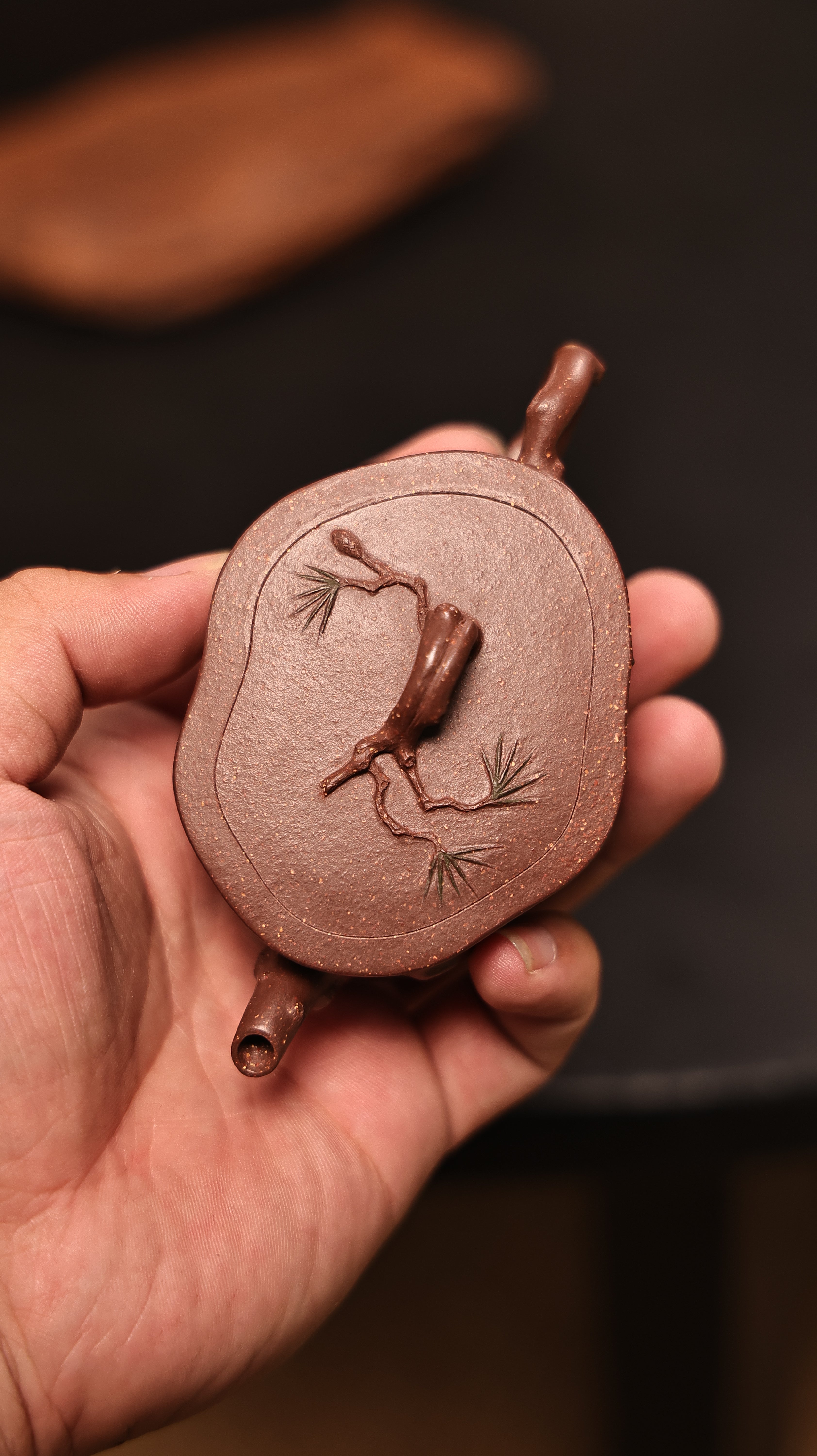
Unending background defines Eastern mugs alongside timespans,
Expressing distinctive traits collected amidst local violet particles, those jars accumulate a layer throughout usage, improving taste drawn from extracted drinks.
Exploring Yixing Sediment: Exhaustive Insights into Zisha
Myriad admirers honor the singular quality of Yixing mulberry clay, a linchpin of enduring Chinese workmanship. Appearing from the Yixing region of Jiangsu province, this notable clay demonstrates an delicate mineral arrangement, whereby contributes superb qualities to the executed containers. Forms within Zisha, including Zhuni Mud, Duan Ni Mud, and Jiang Xi Mud, each features specific pigments, structures, and drying traits, changing the absorption and the terminal savor growth of the infusion.
Chinese Urn Usages: Uncovering Skill
Mandarin teapots embody over mere jars for liquid; they embody centuries of cultural technique. From the distinguished Yixing clay variations, respected for their breathable nature which infuses extraordinary aromas to the brew, to the delicate porcelain from Jingdezhen, each piece discloses a chronicle of dedication. The development process is an careful undertaking, often transferred through clans of makers. These connoisseurs use historic methods such as hand-building, casting on wheels, and ornamenting, demonstrating profound reverence for the medium and the work itself. Appreciate the commitment invested in each piece as a symbol of Chinese craftsmanship legacy.
- Chinese teapots: a esteemed choice.
- Elite ceramic teapots: valued for their refined design.
- Fabricating techniques: a intricate yet worthwhile procedure.
Zisha Teapot Upkeep: Preserving Your Adored Belonging
Appropriate tending of your cherished Yixing Zisha kettle is vital to maintaining its condition. Crafted from renowned purple sand sediment, these exquisite teapots acquire a deep patina after service, decidedly boosting their allure. Refrain from chemicals; a easy rinse with warm aqueous is adequate. Avoid steaming water for refreshing the teapot, as it may crack its composition. Allow it to lose wetness away from direct radiance. Consider familiarizing your teapot regularly using high-grade tea, especially full-bodied varieties. Here is a brief instruction:
- Wash out with lukewarm moisture.
- Stay away from solvents.
- Allow it to dry fully.
- Mature with choice tea.
Heritage of Yixing Teapots: From Humble Origins
The account of Yixing teapots originates unassumingly during the Yuan dynasty, roughly the 16th interval. Initially, these vessels were not the prized products they are understood currently. They were fashioned by local potters using the unique purple clay discovered solely in the Yixing vicinity. These early works were largely utilitarian, meant for routine function and often modest in form. It was not until the following dynasty that they commenced to earn fame beyond mere utility pottery.
Choosing the Right Zisha Teapot: A Starter's Explanation
Approaching the arena of Yixing teapots can be complex, but resist resisting! For starters, the essential factor is understanding the material. Genuine Yixing clay is prized for its porosity, allowing the teapot to collect the tea's note over time, amplifying every making session. Evaluate the shape; traditional round shapes prevail, yet specific preferences are important. Lastly, review the finish—while some favor an unfinished appearance, others adore a light gloss. Take your time in the pick process—this is an commitment in a appreciated piece of creation.
Chinese Purple Containers and Their Power on Chinese Brew Heritage
Zisha vessels, born from Yixing, China, have profoundly affected ancient Chinese potion culture. Those Yixing clay teapots, prized for their unique complexion, pattern, and exceptional ability to impart a subtle aroma to the potion, function as more than mere pots; they are treasured crafts and symbols of status. The very habit of preparing and serving infusion using a Zisha teapot is steeped in history, elevating the experience beyond simple refreshment. Lineages of artisans have honed their techniques, passed down through descendants, resulting in highly coveted pieces. Because of this, Zisha teapots are frequently gathered, playing a crucial part in cultivating Chinese appreciation for aesthetics and the ceremony of beverage ceremonies.
- Peculiar Clay Composition
- Providing Subtle Flavor
- Detailed Craftsmanship
Determining Verified Precious Local Vessels
Collecting a original Yixing teapot can Yixing Zisha Teapot be a beneficial experience, but the realm is often overrun with replicas. Identifying between a true antique and a new reproduction requires exacting inspection. Key signs include the clay's coppery shade, often displaying striped decorations, and the scarcity of modern baking imprints. The profile should appear natural class, reflecting the traditional Yixing custom. Finally, researching the craftsman's imprint is vital to verify truthfulness against certified sources.
- Assess the clay's pattern.
- Look for errors, indicative of handcrafted quality.
- Ask an appraiser for verification.
Considering Purple Kettles: A Detailed Reference to Ceramics Awareness
The realm of Chinese Zisha earthenware shows a outstanding prospect for knowledgeable patrons. Gradually, the appraisal of these handcrafted artifacts is driven by many aspects, such as the class of clay substance, the talent of the fabricator, the legacy significance, and, naturally, the current trade. Newcomers should prioritize on researching the several kinds of Zisha clay—such as Frozen River, Peaceful Container, and Ruby Mud—and exploring the aspects linked to each. Precise appraisal of the object's contour, pigment, and signature is equally important to make astute selections when investing.