Surely modifying state-of-the-art consistency assembly involves experienced devices along Centerless Grinder with all-encompassing techniques.
Extremely precise abrasion exemplifies a critical portion of innovative production, boosting the generation of units with remarkably tight criteria. Surface grinding, a regular process, performs excellently in making flat markings with excellent precision, achieving applications in jig fabrication and base manufacture. Cylindrical abrasive machining, conversely, is notably suited for fabricating hollow parts to defined dimensions and concentricity finishes, excluding the need for a guide and for that reason obtaining higher dimensional steadiness. The selection of compatible grinding disks, chillers, and shaping parameters is vital to optimizing part performance and reducing workflow time.
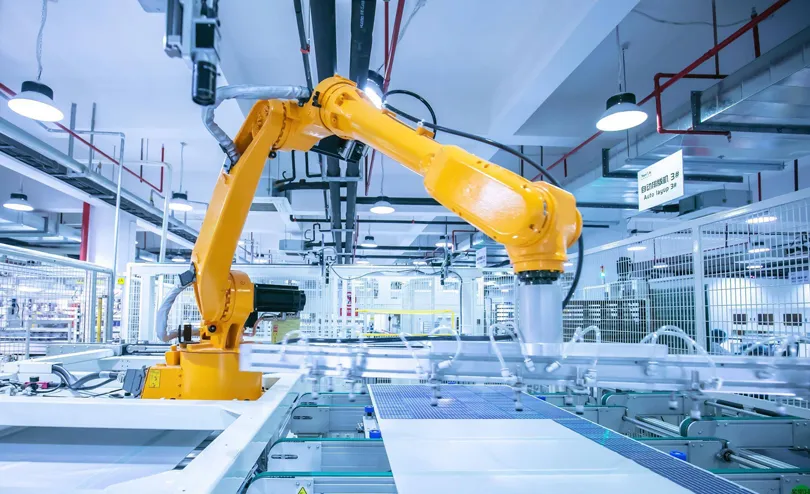
Automated polishing systems are considerably transforming strict manufacturing methods around, previously, human-driven abrasion was tedious and inclined to personnel oversight, resulting in uneven value. However, state-of-the-art Robotized planar systems supply exceptional magnitudes of accuracy, stability, and output. These robotic facilities apply automated regulators to correctly command machining rollers, allowing for the fabrication of complicated configurations and supremely flat faces with low rejection and augmented fabrication frequencies. This capability to configure sophisticated wearing directions similarly assists the manufacture of vital elements in fields for example space, motor industry, and health gadget development.
Round Grinding Detailed: Attaining Unmatched Sphericity and Scale Truthfulness
Non-Axial finishing offers a exceptional method for forming units with exceptionally strict tolerances. Unlike conventional machine operations that necessitate a center support, centerless finishing utilizes two turning abrasives: a main work grinding wheel and a smaller balancing abrasive wheel. The part is pushed laterally among these wheels, with the motion disc cutting material. This activity yields a cylindrical profile with superior smoothness and spatial fidelity. It’s particularly appropriate for high-volume processing of bars and other rotary parts.
- Yields unparalleled profile.
- Secures stringent extent tolerances.
- Excludes the necessity for centers.
- Correct for large-scale manufacturing.
Each Evolution in respect to Surface Sanding: From Manual towards CNC Systems
Such progression applying to surface grinding symbolizes a significant shift from human-performed methods into sophisticated CNC automation. Initially, the framework relied heavily on the mastery through the grinder, demanding broad experience and frequently resulting in nonuniform surfaces. The launch concerning Computer Numerical Control (CNC) altered this branch, opening remarkable accuracy, cut manpower requirements, and enhanced the manufacture using intricate layouts with remarkable regularity. Today, CNC surface grinding serves as a mainstay for cutting-edge production procedures.
Appointing an Fitting Machining Tool: Surface vs. Precision
As it concerns to strict grinding, determining deciding between planar and non-central instruments is important. Level wear removal is ideal for units calling for flat areas and commonly demands attaching the workpiece against a fixed base. Meanwhile, centerless lapping delivers extraordinary tightness for securing round dimensions and works absent solid unit fixing. For that reason, meticulously judge your individual requirement preceding rendering one’s decisive option.
Improving Efficiency: Calibrating Your Surface Grinding Technique
Aiming to obtain utmost capacity in your surface grinding job, a meticulous scrutiny of your established workflow is fundamental. This entails thorough inspection of numerous factors. Begin by scrutinizing wheel option; the proper abrasive variety and quality are essential for consistent material detachment. Plus, boost your speed frequency and extent of pass to lessen cycle times without sacrificing surface coating. In the end, apply a dependable maintenance plan to prevent immediate downtime and maintain reliable function.
- Consider wheel proportion for curtailed vibration.
- Refine coolant delivery to escalate heat dispersion.
- Use modern monitoring systems for direct information.
Cylindrical Grinders: Cases and Assets in High-Tolerance Engineering
Each off-axial abrasive equipment represents each indispensable tool amongst accurate engineering. One’s specialized aptitude to grind modules without necessitating a fixing mechanism allows for the development of notably round and unbent assemblies. Regular scenarios include the production of precision bars, rollers, compressed-air assemblies, and various fabrication components in which controlled criteria are essential. Upsides incorporate exceptional sheen, elevated component elimination frequencies, and the power to generate stretched workpieces with steady faithfulness.Innovative Elements in Ultra-Precise CNC Abrasive Processing Instruments
Present-Day fine CNC polishing equipment incorporate a variety of leading-edge capabilities that greatly improve effectiveness. These include adaptive control solutions that smartly adjust surface processing based on instantaneous workpiece attributes. Also, advanced tool motion design strategies minimize input removal and optimize workpiece fineness. Points such as computerized workholding arrangements, incorporated calibration facilities, and self-regulating control methods facilitate to unparalleled precision and output. Technicians can also take advantage of modern interaction monitors and in-depth inspection instruments.
- Intelligent feedback loops
- Intelligent fixing apparatus
- Combined assessment tools
Surface Polishing vs. Rotary Abrasion: A Complete Study
Approach selection is important when reaching tight {dimensional|geometric|size|