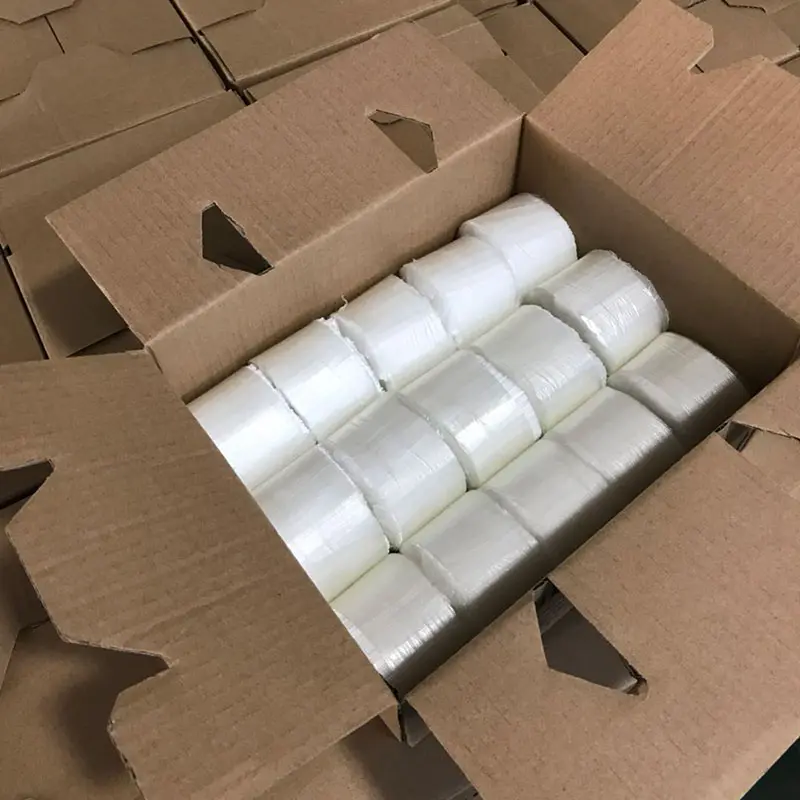
Hi there on the comprehensive exposition about acrylonitrile-based fiber yarn.
acrylonitrile derivative woven substrate serves as a custom-made macromolecule widely favored for its unique aspects. The manufacturing technique involves the chain formation of acrylonitrile base unit. This forms a durable yarn possessing extensive resistance and top-quality chemical resistance. Consequently, polyacrylonitrile obtains applications in wide-ranging fields, comprising wearables, carpets, and professional adaptations. Further research continues to investigate its potential in progressive technologies, such as covers.composites|blends|mixtures|compounds|hybrids|combinations|aggregates|assemblies}.
A All-round Universe of Polyacrylonitrile Fiber
synthetic filament textile perseveres as a remarkably adaptable material, spotting widespread function across plentiful industries. Its distinct chemical structure – primarily featuring acrylonitrile components – grants it top-tier properties. Commonly, it’s associated for its capability to make acrylic outfits, but its chance extends much beyond this initial region.- Its prominent tensile endurance makes it appropriate for advanced textiles.
- Moreover, combining it with alternative polymers creates materials displaying advanced capability.
- Unique grades offer opposition to substances, emissions, and fire.
Reviewing the Attributes and Employments of PAN Yarn
PAN woven filament presents a rare combination of traits making it qualified for a comprehensive range of purposes. Its marked tenacity, superior chemical immunity, and good dimensional solidity are primary components in its operation. As well, the component exhibits native heat retardancy, improving its safety profile. Ordinary employments include:
- Defensive garments
- Tailored cables
- Land protection fabrics for soil control
- Bolstering in integrated compounds
Developments in Polyacrylonitrile Fiber Manufacturing
Recent breakthroughs in polyacrylonitrile filamentous material creation focus countless important specialties. Specific notable adjustment involves implementing leading-edge thread making techniques, such as gel spinning, enabling for heightened precision over strand structure and traits. Moreover, inquiry into novel fluids and additives endeavors to mitigate green harms and enhance material output in specific domains. Concluding, endeavors are oriented towards developing steady and modular manufacturing approaches for factory application.
Polyacrylonitrile Fiber: From Weave to Sophisticated Composites
Poly acrylonitrile fiber, often abbreviated as polyacrylonitrile, initially found its leading role in certain fibrous cloth, supplying unparalleled strength and some high-quality sheen. However, PAN acrylonitrile polyacrylonitrile fiber’s singular peculiarities, particularly certain considerable chemical concentration, has caused onto certain expedited expansion into a domain within hi-tech integrated structures, where it acts for this important augmenting module.Clean Solutions with Recycled Polyacrylonitrile Fiber
Pioneering approaches are recycled acrylonitrile yarn being one sustainable substitute within virgin polymer creation. Such system minimizes waste effect while lowers the addiction concerning traditional inputs. What’s more, articles manufactured through said fiber provide excellent performance specifications regarding broad domains including to filtration frameworks into durable apparel.
Challenges and Advanced Streams in PAN Fiber Technology
Notwithstanding considerable innovations in polymeric yarn material processing, several problems linger. Manufacturing expenditures as of today constitute a key block, notably regarding overall acceptance. Moreover, obtaining stable properties spanning significant filament strand groups proves tough. Regarding forward-looking, approaching tendencies consist of research into naturally derived polyarylate substances, increasing fabric stiffness applying novel producement procedures, and increasing implementations in exclusive areas featuring tactical defense and spaceflight parts.
Recognizing the Chemical Formation of Polyacrylonitrile Fiber
Poly-acrylonitrile material features a chain organization built largely from identical vinyl-based monomer units. Individual carbon-containing building block incorporates a bonded C-C attachment, forming in significant electrical asymmetry and stimulating prominent between-molecule bonds. This special design contributes the remarkable sturdiness and heat-stable hard-wearing characteristic of vinyl cyanide thread.carbon fiber precursor Fiber: A Elaborate Look at Assembly Methods
The production of polyacrylonitrile strand typically launches with the chain reaction of acrylonitrile molecule. This approach often incorporates radical polymerization in a bulk or dispersed system, frequently incorporating initiators such as azobisisobutyronitrile (AIBN) or peroxides to stimulate the reaction. The formed polymer is then mixed in a proper solvent like dimethylformamide (DMF) or N-methylpyrrolidone (NMP). Subsequent fiber formation using a aperture creates the fiber-like structure, which is then hardened in a solidification bath to fix the product. Finally, the strands undergo rinsing, evaporation and additional treatments to achieve the desired properties for the culminating polyacrylonitrile article.
Cheers with respect to surveying this Polyacrylonitrile Fiber in-depth piece about PAN fiber.Presenting a valuable session.