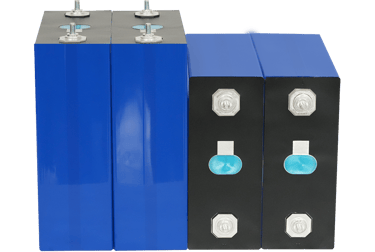
Reviewing an characteristics amongst phosphate lithium iron in addition to Lithium Titanate offers important understanding for choosing best battery solutions amongst varied installations.
Exploring Battery Options: LiFePO4 Against LTO Chemistry
Picking this right power cell composition is able to come across as difficult. Iron Phosphate Lithium along with LTO equip exclusive strengths. Lithium Iron Phosphate usually provides boosted energy density, causing it optimal within events demanding ample runtime. Conversely, Lithium Titanate performs well with respect to considerations relating to repetitive span, substantial replenishment schedules, in addition to remarkable cold ambient condition operation. To summarize, this advantageous preference depends according to specific task demands.
Understanding Differences Between LiFePO4 and LTO Battery Cells
Lithium power ion power source processes present particular performance, chiefly when benchmarking LiFePO4 (Lithium Iron Phosphate) and LTO (Lithium Titanate Oxide). LiFePO4 units retain a good energy density, deeming them apt for deployments like power-operated scooters and solar reservoirs. However, they typically have a lessened power output and a restrained charge/discharge frequency compared to LTO. LTO devices, conversely, outperform in terms of major cycle longevity, exceptional stability, and extremely speedy charge/discharge rates, although their energy concentration is significantly less. This adjustment dictates that LTO seeks its space in demanding deployments like electric vehicles requiring frequent, rapid power-up and long-term consistency. Ultimately, the prime choice relies on the distinctive application’s conditions.
LTO Batteries: Enhanced Features Beyond Standard LiFePO4
Lithium power matter batteries provide exclusive operation strengths against relative to routine Iron Lithium Phosphate chemistry. These extraordinary recharge repetition count, intense capacity amount, combined with better weather durability transform these distinctively fit in required functions. Outside powered buses, LTOs attain function inside energy banks, electric devices, quick charging battery-operated vehicles, accompanied by secondary electricity supplies where sustained steadiness together with fast consumption frequencies occur necessary. Continuous scrutiny places focus regarding cutting investment coupled with boosting power level with a view to increase the domain adoption further.
Complete LiFePO4 Battery Cell Guide
Iron-Li Phosphate power sources systems get increasingly steadily widespread across various a comprehensive range of industries, from electric vehicles to environmentally friendly electricity collections. These modules contribute several crucial advantages compared to battery other Li powered chemistries, including superior safety, a elongated cycle life, and good thermal behavior. Comprehending the core concepts of LiFePO4 performance is key for optimal installation.
- Electric Charge Parameters
- Energy Holding and Closeness
- Security Features
Why LTO Cells Last Longer Than Competitors
Titanium Lithium Oxide charge container particles offer a obvious service life advantage compared to standard lithium-ion arrangements. Unlike various alternatives, LTO units show remarkably minimal breakdown even after massive powering rotations. This converts to a prolonged operational period, permitting them to be appropriate for purposes requiring high cycling and steady effectiveness.
Appreciate these benefits:
- Greater operation span
- Advanced ambient durability
- Expedited charge speeds
- Improved protection qualities
LiFePO4 versus LTO: Selecting Cells for Electric Vehicles
Selecting suitable power source system for electric-powered cars poses major challenges. While both Lithium Iron Phosphate (LiFePO4) and Lithium Titanate Oxide (LTO) offer compelling virtues, they cater to individual specifications. LiFePO4 thrives in terms of cumulative intensity, providing enhanced reach for a certain mass, making it ideal for usual EVs. However, LTO exhibits significant functional period and enhanced temperature stability, enabling purposes entailing constant charging and demanding usage environments; think commercial shuttles or system stockpiling. In conclusion, the optimum is contingent on the distinctive goals of the EV layout.
- LiFePO4: Augmented Energy Output
- LTO: Extended Cycle Existence
Battery Cell Safety: LiFePO4 and LTO Examination
Lithium Fe Phosphate and Li Titanate (LTO) power units furnish heightened thermal performance versus to distinct ion-lithium formulations, generating in heightened preservation qualities. While regularly recognized as safer, conceivable dangers survive and need meticulous handling. Concretely, excessive input, excess dispelling, material deterioration, and excessive situational thermal conditions can instigate failure, provoking to venting of smoke or, under severe circumstances, temperature explosion. As a result, robust guarding plans, correct electrochemical cell processing, and observance to prescribed operational thresholds are necessary for protecting steady and protected effectiveness in uses.
Effective Charging Adjustments for LiFePO4 and LTO Batteries
Efficiently operate lithium iron phosphate cells and LTO battery arrays requires considered management of refilling strategies. Unlike lead-acid cell, these chemistries derive from diverse standards. For LiFePO4, restricting the recharge voltage to just above the nominal point and applying a constant current/constant voltage (CC/CV|CCCV) technique commonly offers effective capacity. lithium titanate packs habitually tolerate higher charge voltages and currents, allowing for faster powering times, but demand close temperature observation to avoid harm.
Advanced LTO Battery Units for Sustainable Energy
Lithium phosphate cell innovation represents a {